
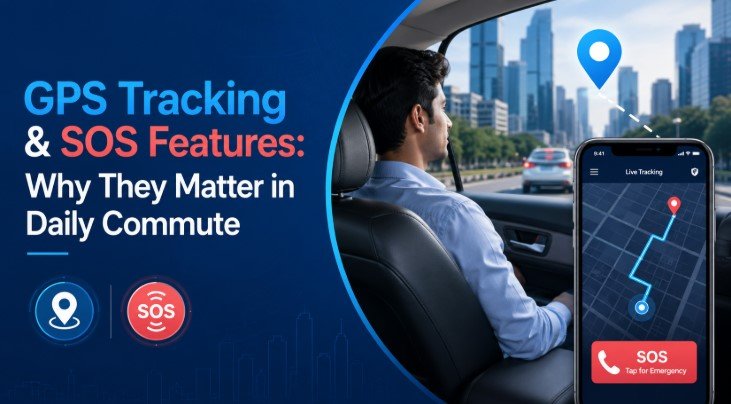
GPS Tracking & SOS Features: Why They Matter in Daily Commute
Summary
GPS tracking and SOS features are the two core safety technologies in a modern cab: GPS lets a trip be monitored and shared in real time, while an SOS or panic button sends an instant alert to a control room or trusted contacts if something goes wrong. Together they close the safety loop – the journey is watched, and help is one tap away. For a daily commuter, that means quiet reassurance on every trip; for women travelling at odd hours and for employers meeting a duty of care, these features move from nice-to-have to essential. Technology is not a substitute for a verified driver and a safe vehicle, but layered on top of them it makes a real, measurable difference to safety. This guide explains how GPS tracking and SOS features work, why they matter, and what to look for. For tracked, SOS-enabled travel, cabrentalhub.in offers daily and monthly cabs with live tracking and support.
Key Takeaways
- GPS tracking monitors the trip in real time and lets you share your live location with a trusted contact.
- An SOS button sends an instant alert to a control room or contacts, summoning help in one tap.
- Together they close the loop: the journey is watched and help is immediately reachable.
- They matter most at odd hours, making them central to women’s safety and late-shift travel.
- Employers gain oversight and duty-of-care assurance from tracked, SOS-enabled transport.
- Technology complements, not replaces, verified drivers and safe vehicles – all layers matter.
What are GPS tracking and SOS features?
GPS tracking is technology that pinpoints and follows a vehicle’s live location, while an SOS feature is a panic button that instantly alerts a control room or emergency contacts when triggered. One is about continuous monitoring, the other about immediate response – and modern cab safety technology combines both. GPS answers “where is the cab right now?” and SOS answers “how do I get help fast?”. They are the technological heart of the safety pillars set out in the commute safety guide, sitting alongside verified drivers and safe vehicles.
How does GPS tracking work in a cab?
GPS tracking works by continuously locating the vehicle via satellite and relaying that position to an app or control room, so the trip can be followed live, shared, and checked against the expected route. In practice this enables several things: real-time location visible to you and, if you choose, a trusted contact; route monitoring so an unexpected detour is noticed quickly; live trip sharing so someone always knows where you are; and, in advanced systems, alerts for deviations or unusual stops. On a regular route such as a Monthly cab service from noida to gurgaon, tracking quickly makes the normal path familiar, so anything out of the ordinary stands out at once.
How does an SOS feature work?
An SOS feature works as a one-tap panic button – in the cab app or the vehicle – that, when pressed, immediately sends an alert with your location to a control room, emergency contacts, or both, triggering a rapid response. The value is speed and simplicity: in a worrying moment, a single tap does the work of several frantic calls. A good SOS setup routes the alert to a 24×7 control room that can see your live location, contact the driver, loop in your emergency contacts, and escalate if needed. An SOS button in a cab app is only as good as the response behind it, so the presence of a staffed control room matters as much as the button itself.
Want a cab with live tracking and SOS?
Tell us your route – we’ll set up a daily or monthly cab with live GPS tracking and SOS support as standard.
Why GPS and SOS matter in a daily commute
GPS and SOS matter because they turn a commute from something unmonitored into something watched and supported – reducing risk and adding reassurance on every trip. The benefits are practical and cumulative, as the table shows.
| Feature | What it does | Benefit to you |
|---|---|---|
| Live GPS tracking | Shows real-time location | Trip is monitored and shareable |
| Route monitoring | Follows the planned route | Detours are noticed early |
| Trip sharing | Shares live status with a contact | Someone always knows where you are |
| SOS / panic button | Sends a one-tap alert | Help is summoned instantly |
| 24×7 control room | Monitors and responds | Fast, staffed action on alerts |
| Deviation alerts | Flags unusual stops or routes | Proactive rather than reactive safety |
How GPS and SOS work together
GPS and SOS work together as monitoring plus response: GPS keeps the journey visible, and SOS acts on that visibility by summoning help to a known location the instant it is needed. Neither is complete alone – tracking without a response mechanism only watches, and an SOS without live location makes help slower to arrive. Combined, they form a full safety loop: the control room already knows where you are, so when the SOS fires, response is immediate and precise. This pairing is what makes modern cab safety technology genuinely effective rather than merely reassuring on paper.
GPS and SOS for women's safety and late shifts
For women travelling alone and for anyone on early or late shifts, GPS tracking and an accessible SOS are among the most valuable safety features a cab can offer. At odd hours, with fewer people around, the ability to have a trip watched and to summon help in one tap is especially reassuring. Combined with trip-sharing and a staffed control room, these features underpin safe late-night travel, as covered in the guide to women safety cab night travel. They give both the traveller and their family real peace of mind on journeys that would otherwise feel exposed.
Setting up tracked transport for your team?
Share your routes and shifts – we’ll set up GPS-tracked, SOS-enabled employee transport with a staffed control room.
What employers gain from GPS and SOS
Employers gain real oversight and duty-of-care assurance from GPS and SOS: they can confirm safe pickups and drops, respond quickly to incidents, and demonstrate that staff transport is genuinely monitored. For organisations running employee transport, tracked trips and a staffed SOS control room turn a duty-of-care obligation into a manageable, auditable system. It also provides useful operational data – arrival times, route adherence, exceptions – that supports both safety and efficiency. These capabilities are a key item on any safety compliant cab vendor checklist, whether for a corporate cab services in gurgaon contract or a monthly cab service in Delhi across sites.
Do all cabs offer GPS and SOS?
Not all cabs offer genuine GPS tracking and SOS – some have basic location features with no real response behind them, while others build proper, staffed safety technology in as standard. The difference matters: a map dot with no control room is reassurance without response, whereas a reputable monthly private cab service treats live tracking, an accessible SOS and a staffed support desk as core features, not add-ons. When comparing options, do not assume the presence of an app means the safety technology is real and monitored. Ask specifically what happens when the SOS is pressed and who is watching the live location, so you can tell a genuine safety system from a superficial one.
What to look for in a cab's safety technology
When assessing a cab{RS}s safety technology, look for these capabilities.
| Look for | Why it matters |
|---|---|
| Real-time GPS tracking | Accurate live location, not delayed |
| Accessible SOS | Reachable in seconds, in app and vehicle |
| 24×7 staffed control room | Someone always responds to an alert |
| Live trip sharing | Keeps a trusted contact informed |
| Deviation / speed alerts | Flags detours or unsafe driving |
| Data privacy | Location data stored and used responsibly |
Limits and good practice
GPS and SOS are powerful but not magic: they depend on connectivity and charged devices, and they complement rather than replace a verified driver and a safe vehicle. Good practice is to treat technology as one layer of a system. Keep your phone charged so the app and SOS remain usable, ensure your trusted contact knows what an alert means, and choose a service where the human response behind the technology is genuinely staffed. Most importantly, remember that the strongest safeguard remains a properly driver verification cab vendor process – technology makes a safe setup safer, but cannot substitute for accountable drivers and roadworthy vehicles. Used together, people, process and technology deliver real safety.
Book a tracked, SOS-enabled cab
Send your route and timing – we’ll set up a daily or monthly cab with live tracking, SOS and a staffed support desk.
Conclusion
GPS tracking and SOS features are the technological backbone of a safe commute: one keeps the journey visible, the other makes help instant, and together they close the safety loop. They matter on every daily trip and become essential at odd hours, for women travelling alone, and for employers meeting a duty of care. Choose a service where these features are real and staffed – accurate live tracking, an accessible SOS, and a 24×7 control room – and layer them on top of verified drivers and safe vehicles rather than in place of them. When you want daily or monthly travel with live tracking and SOS support, cabrentalhub.in helps you commute with genuine peace of mind.
Frequently Asked Questions (FAQs)
What are GPS tracking and SOS features in a cab?
GPS tracking is technology that pinpoints and follows a vehicle’s live location so a trip can be monitored, shared and checked against the route, while an SOS feature is a one-tap panic button that instantly alerts a control room or emergency contacts when triggered. One provides continuous monitoring and the other immediate response, and modern cab safety technology combines both.
How does GPS tracking make a commute safer?
GPS tracking makes a commute safer by showing the vehicle’s real-time location, letting you share your live trip with a trusted contact, and allowing the route to be monitored so an unexpected detour is noticed quickly. Advanced systems can also alert on deviations or unusual stops, turning a journey from unmonitored into watched and shareable.
How does an SOS button in a cab work?
An SOS button works as a one-tap alert in the cab app or vehicle that, when pressed, immediately sends your location to a control room, emergency contacts, or both, triggering a rapid response. Its value is speed and simplicity in a worrying moment, and a good setup routes the alert to a 24×7 control room that can see your location, contact the driver, and escalate as needed.
Why do GPS and SOS matter most at night?
GPS and SOS matter most at night and at odd hours because there are fewer people around, so the ability to have a trip watched and to summon help in one tap is especially valuable. Combined with trip-sharing and a staffed control room, they underpin safe late-night travel and give both the traveller and their family real peace of mind.
What should employers look for in cab safety technology?
Employers should look for real-time GPS tracking, an accessible SOS reachable in seconds, a 24×7 staffed control room that actually responds, live trip sharing, deviation or speed alerts, and responsible handling of location data. These capabilities provide oversight and duty-of-care assurance, and are a key item on any safety-compliant vendor checklist.
Do GPS and SOS features replace the need for a verified driver?
No – GPS and SOS complement rather than replace a verified driver and a safe vehicle. Technology depends on connectivity and charged devices and works best as one layer of a system, so the strongest safeguard remains a proper driver verification process, with tracking and SOS making an already-safe setup safer.
Is an SOS button useful without a control room?
An SOS button is far less useful without a staffed response behind it, because an alert only helps if someone acts on it quickly. A good SOS setup routes the alert to a 24×7 control room that can see your live location and respond, which is why the presence of a staffed control room matters as much as the button itself.
How to Choose the Right Cab Rental Vendor: A Decision-Making Guide
How to Choose the Right Cab Rental Vendor: A Decision-Making Guide Summary To choose the right cab rental vendor, evaluate...
November 5, 2026
Building a Safe Commute Policy for Late-Shift and Night-Shift Employees
Building a Safe Commute Policy for Late-Shift and Night-Shift Employees Summary A safe commute policy for late-shift and night-shift employees...
November 3, 2026
Driver Verification Process: What a Trustworthy Cab Vendor Should Offer
Driver Verification Process: What a Trustworthy Cab Vendor Should Offer Summary A trustworthy cab vendor should verify every driver through...
October 31, 2026