
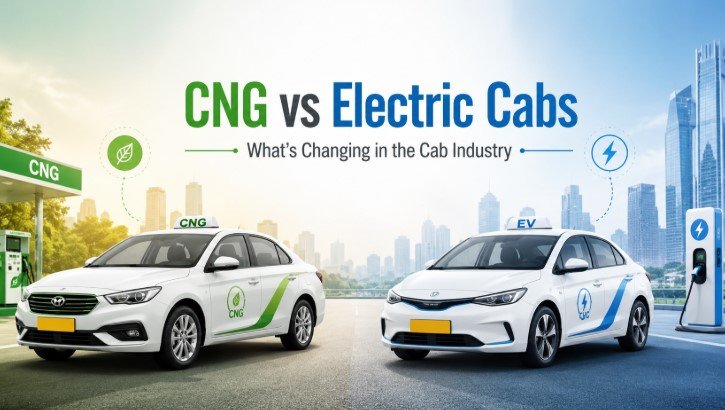
CNG vs Electric Cabs: What's Changing in the Cab Industry
CNG has long been the backbone of the NCR cab fleet, but the industry is now shifting toward electric cabs, driven by air-quality rules that from January 2026 bar cab and delivery fleets in Delhi-NCR from adding new petrol or diesel vehicles. Electric cabs offer lower running costs and zero tailpipe emissions, while CNG remains established, quick to refuel and widely available. Neither replaces the other overnight – the rules apply to new fleet additions, so the change is gradual as older vehicles retire. For riders, the direction is clearly toward cleaner, quieter rides and, over time, more stable running costs. This guide explains what is changing, why, how CNG and electric cabs compare, and what it means for daily commuters. As the fleet modernises, cabrentalhub.in helps you find comfortable, reliable daily and monthly cab options for your route.
Key Takeaways
- The industry is shifting from CNG to electric, driven by NCR air-quality rules limiting new petrol and diesel fleet vehicles from January 2026.
- The change applies to new fleet additions, so it is gradual – CNG cabs remain on the roads as the mix slowly shifts.
- Electric cabs win on running cost and emissions, with lower per-km energy cost and zero tailpipe output.
- CNG cabs win on maturity and refuelling, being cheaper to buy and quick to refill at a wide station network.
- Charging infrastructure is the main constraint holding back faster EV adoption, though it is expanding.
- For riders it means cleaner, quieter rides and, over time, more predictable running costs as fleets modernise.
What is changing in the cab industry: CNG vs electric?
What is changing is the fuel powering cabs: the industry is moving from CNG, long the clean-fuel workhorse of NCR fleets, toward electric vehicles, under tightening air-quality regulation. For years, CNG was the answer to cleaner cab travel in Delhi-NCR. Now electric is the next step, as policy pushes fleets to zero-emission vehicles. This is one of the defining shifts in the sector, sitting alongside the infrastructure and cost changes covered in the pillar on commute traffic trends 2026.
Why is the cab industry shifting from CNG to electric?
The cab industry is shifting from CNG to electric mainly because of air-quality regulation, supported by the lower running cost and zero tailpipe emissions of EVs. A directive from the Commission for Air Quality Management set January 1, 2026 as the point from which cab aggregators, delivery and e-commerce fleets in Delhi-NCR can no longer add new petrol or diesel vehicles – only CNG or electric. Haryana formalised this for its NCR districts in 2026, aligning with Delhi’s existing framework, and has floated incentives such as EV tax exemptions. Because the rule targets new fleet additions rather than forcing existing vehicles off the road, the transition is gradual, but the direction is fixed: cleaner cabs, increasingly electric.
Prefer a clean, modern cab for your commute?
Tell us your route and we’ll set up a comfortable, reliable daily or monthly cab that fits the cleaner-fleet direction.
CNG vs electric cabs: the full comparison
The table sets CNG and electric cabs side by side across the factors that matter for fleets and riders.
| Factor | CNG cab | Electric cab |
|---|---|---|
| Energy source | Compressed natural gas | Electricity (battery) |
| Running cost | Low, but gas prices vary | Lower per km |
| Upfront vehicle cost | Lower | Higher (battery cost) |
| Refuel / recharge | Quick refill, wide network | Longer charge; network growing |
| Tailpipe emissions | Lower than petrol/diesel, still emits | Zero |
| Noise | Moderate | Very quiet |
| Maturity in fleets | Established backbone | Growing fast |
| Best suited to | Long daily distances now | Fixed urban routes, modernising fleets |
CNG cabs: strengths and limits
CNG cabs remain popular because they are cheaper to buy than EVs, quick to refuel at a wide station network, and far cleaner than petrol or diesel. For fleet operators running long daily distances, CNG’s fast refuelling and established infrastructure are real advantages today. The limits are that CNG still produces emissions (less than petrol or diesel, but not zero), gas prices fluctuate, and its long-term role shrinks as decarbonisation policy tightens. For now, CNG remains the practical backbone of many NCR fleets, including plenty of office cab services.
Electric cabs: strengths and limits
Electric cabs offer the lowest per-km running cost, zero tailpipe emissions, and a quiet, smooth ride, which makes them attractive for fixed urban routes. Their appeal grows as electricity is cheaper per kilometre than fuel and maintenance is often simpler with fewer moving parts. The main limits are a higher upfront vehicle cost and the need for charging – both charging time and the still-expanding network of chargers – which can constrain long-distance use. As charging infrastructure improves, these limits ease, and electric cabs become viable for more routes.
Want a comfortable daily cab, CNG or electric?
Share your route and timings – we’ll match you with a clean, well-maintained cab and a fixed, predictable fare.
What does the shift to electric mean for riders?
For riders, the shift to electric means cleaner, quieter rides and, over time, more stable running costs, with little change to how you book or travel. An electric cab is smoother and near-silent compared with a fuel vehicle, and its lower, less volatile running cost can translate into steadier fares over the long run. In the near term you will see a mix of CNG and electric cabs as fleets transition, so the practical experience – booking, reliability, comfort – matters more than the badge on the car. The table shows how the shift touches the rider experience.
| Aspect | CNG cab today | Electric cab (and ahead) |
|---|---|---|
| Ride comfort | Comfortable | Quieter, smoother |
| Emissions exposure | Lower than older fuels | Zero tailpipe |
| Fare stability | Varies with gas prices | Steadier running cost over time |
| Availability now | Widely available | Growing, route-dependent |
What does it mean for daily and monthly commuters?
For daily and monthly commuters, the fleet shift mostly means cleaner rides and steadier long-term costs, while what you should focus on when booking stays the same – reliability, comfort and a fair, predictable fare. Whether your cab runs on CNG or electricity, a fixed daily or monthly plan gives you a consistent vehicle, driver and fare. On a regular route such as a Monthly cab service from noida to faridabad, or a city plan like a monthly cab service in gurgaon or a monthly cab service in Delhi, the modernising fleet simply means the ride gets cleaner over time without changing how you plan your commute. Cost-wise, this pairs with other running-cost shifts covered in the guide to toll FASTag cost commute routes.
The road ahead: how fast will cabs go electric?
Cabs will go electric gradually rather than overnight, because the current rules limit new petrol and diesel additions but do not retire existing CNG vehicles, and because charging infrastructure is still catching up. The pace depends on how quickly chargers expand, how vehicle and battery costs fall, and how firmly policy is enforced. Expect a growing share of electric cabs alongside a CNG fleet that stays on the roads for years yet. New infrastructure will help too – the road and charging build-out is part of the wider changes in the guide to upcoming expressway metro projects NCR, and timing your travel well remains useful whatever the fuel, as the best time to travel Noida to Gurugram guide shows.
Book a cleaner, comfortable commute
Send your route, timing and days – we’ll set up a reliable daily or monthly cab with a clear, predictable fare.
Which is really greener, CNG or electric?
Electric cabs are greener at the point of use because they produce zero tailpipe emissions, while CNG is cleaner than petrol or diesel but still burns a fossil fuel and emits at the tailpipe. The fuller picture depends on how the electricity is generated: an EV charged from a cleaner grid has a much smaller overall footprint, and as India’s grid adds more renewable power, that advantage grows. CNG remains a genuine improvement over older fuels and a practical bridge, but electric is the lower-emission option at the roadside today and increasingly over its whole life. For riders who care about their travel footprint, an electric cab is the cleaner choice, with CNG a solid step up from petrol or diesel.
Conclusion
The cab industry’s move from CNG to electric is one of its biggest shifts in years, driven by air-quality rules and supported by the lower running cost and zero emissions of EVs. It is a gradual change – CNG cabs will share the road with a growing electric fleet for some time – but the direction is clear: cleaner, quieter, more cost-stable travel. For commuters, the smart approach is to focus on what always matters – a reliable vehicle, a consistent driver and a predictable fare – while enjoying the cleaner rides that come with a modernising fleet. When you want a daily or monthly cab that is comfortable, dependable and fairly priced, cabrentalhub.in lets you compare options for your route.
Frequently Asked Questions (FAQs)
What is changing in the cab industry, CNG or electric?
The cab industry is shifting from CNG, long the clean-fuel workhorse of NCR fleets, toward electric vehicles, under tightening air-quality regulation. From January 2026, cab aggregator and delivery fleets in Delhi-NCR can no longer add new petrol or diesel vehicles, accelerating the move to CNG and, increasingly, electric cabs.
Why are cabs switching from CNG to electric?
Cabs are switching mainly because of air-quality rules, supported by the lower running cost and zero tailpipe emissions of electric vehicles. A Commission for Air Quality Management directive set January 1, 2026 as the point from which Delhi-NCR fleets can add only CNG or electric vehicles, and states such as Haryana have formalised this with additional EV incentives.
Are electric cabs cheaper to run than CNG cabs?
Electric cabs generally have a lower per-kilometre running cost than CNG cabs, along with often-simpler maintenance due to fewer moving parts. However, they cost more upfront and depend on charging, so the overall economics vary by route and usage, though the running-cost advantage tends to grow as charging improves.
Will CNG cabs disappear soon?
No, CNG cabs will not disappear soon, because the current rules limit new petrol and diesel fleet additions rather than retiring existing CNG vehicles. CNG cabs will remain on the roads for years as the fleet mix gradually shifts toward electric, with the pace depending on charging infrastructure, vehicle costs and enforcement.
What does the shift to electric cabs mean for riders?
For riders, the shift means cleaner, quieter rides and, over time, more stable running costs, with little change to how you book or travel. In the near term you will see a mix of CNG and electric cabs as fleets transition, so reliability, comfort and a fair fare matter more than the fuel type.
Is an electric cab better than a CNG cab for daily commuting?
An electric cab can be better for a fixed urban commute thanks to its lower running cost, zero emissions and quiet ride, while a CNG cab currently suits long daily distances with its quick refuelling and wide network. For most commuters, a reliable vehicle with a consistent driver and predictable fare matters more than the fuel, whichever powers the cab.
What is the main obstacle to cabs going electric?
The main obstacle is charging infrastructure – both the time to charge and the still-expanding network of chargers – along with the higher upfront cost of electric vehicles. As charging expands and vehicle costs fall, these constraints ease and electric cabs become viable for more routes.

What Is the Golden Triangle Tour and How Many Days Does It Need?
What Is the Golden Triangle Tour and How Many Days Does It Need? Summary The Golden Triangle is India’s most...
October 17, 2026

What Should Drivers Know About the Delhi–Mumbai Expressway to Jaipur?
What Should Drivers Know About the Delhi–Mumbai Expressway to Jaipur? Summary The Delhi–Mumbai Expressway has made the drive to Jaipur...
October 17, 2026

What Is the Perfect 2-Day Jaipur Itinerary?
What Is the Perfect 2-Day Jaipur Itinerary? Summary Two days is ideal for Jaipur – enough to cover the Pink...
October 17, 2026