
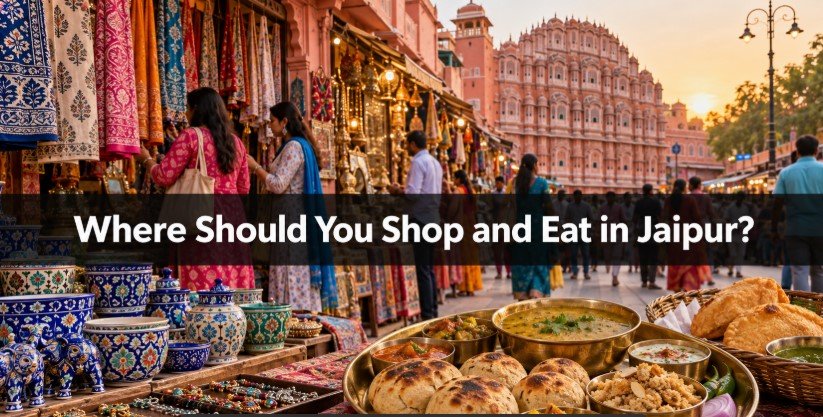
Where Should You Shop and Eat in Jaipur?
Summary
Jaipur is a paradise for food and shopping. For food, try the city’s famous dishes – dal baati churma, pyaaz kachori, mirchi bada, thick lassi, and the sweet ghewar – at the Pink City’s legendary sweet shops and eateries. For shopping, the walled-city bazaars are the place: Johari Bazaar for jewellery and gems, Bapu Bazaar for textiles and jootis, Tripolia Bazaar for lac bangles and brassware, plus blue pottery, block prints and handicrafts. This guide covers the best food in Jaipur, the famous dishes, and the top shopping markets – so you can eat and shop like a local, plus how to reach Jaipur easily from Faridabad. Shop and eatery details change, so treat specifics as a guide and check current information locally.
Key Takeaways
- Must-try dishes: dal baati churma, pyaaz kachori, mirchi bada, lassi, ghewar.
- Johari Bazaar – jewellery, gems and textiles; the classic shopping street.
- Bapu Bazaar – textiles, jootis (mojari) and handicrafts.
- Tripolia Bazaar – lac bangles, brassware and ironware.
- Also famous for: blue pottery, block prints, gemstones and bandhani textiles.
- Bargain politely in the markets – it is normal practice.
Famous Jaipur dishes to try
Rajasthani cuisine is rich, hearty and full of flavour, and Jaipur is the perfect place to sample it. The must-try famous Jaipur dishes:
| Dish | What it is |
|---|---|
| Dal baati churma | The signature Rajasthani plate – baked wheat balls, lentils and sweet churma |
| Pyaaz kachori | A crisp, spiced onion-filled kachori – a Jaipur breakfast icon |
| Mirchi bada | A large, spicy chilli fritter, a popular street snack |
| Ghewar | A disc-shaped sweet, especially loved in the festival season |
| Lassi | Thick, creamy yogurt drink, often served in earthen cups |
| Laal maas | A fiery Rajasthani mutton curry (for non-veg diners) |
Round it off with a traditional Rajasthani thali for the full spread. Vegetarians are especially well served, and the sweets – ghewar, and milk-based treats – are a highlight in themselves.
Where to eat in Jaipur
Jaipur has beloved, long-running eateries and sweet shops, many in and around the walled city and MI Road. Some well-known types of stop:
- Classic sweet shops – famous names around Johari Bazaar and MI Road for pyaaz kachori, ghewar and sweets.
- Traditional lassi shops – for thick lassi in an earthen cup.
- Rajasthani thali restaurants – for the full dal-baati-churma spread.
- Chokhi Dhani – a cultural village on the outskirts for a Rajasthani dinner-and-folk experience.
- Rooftop cafes – near the walled city for views over the Pink City.
Eatery names, timings and popularity change over time, so it is worth a quick local check, but the walled city and MI Road are the heart of Jaipur’s food scene. Come hungry and pace yourself across the day.
Plan a Jaipur food-and-shopping trip
Book a cab from Faridabad to Jaipur – a car for the day to move between the bazaars, sweet shops and sights.
Jaipur shopping markets
Jaipur’s walled-city bazaars are famous across India, each with its own speciality. The main Jaipur shopping markets:
| Market | Known for |
|---|---|
| Johari Bazaar | Jewellery, gemstones, bandhani & textiles |
| Bapu Bazaar | Textiles, jootis (mojari), handicrafts, perfumes |
| Tripolia Bazaar | Lac bangles, brassware and ironware |
| Nehru Bazaar | Jootis, textiles and trinkets |
| Chandpole / Kishanpole | Marble items, handicrafts and textiles |
Jaipur is especially famous for gemstones and jewellery, blue pottery, block-printed and bandhani/leheriya textiles, jootis (traditional footwear), lac bangles and razai (light quilts). It is a wonderful place to pick up handicrafts and gifts – just buy from reputable shops, especially for expensive gemstones.
The bazaars are busiest and most atmospheric in the late afternoon and evening, when the old city comes alive. Many shops stay open into the evening, so you can comfortably combine sightseeing earlier in the day with shopping and street food as the light softens – a lovely way to end a Jaipur day.
Carry your Jaipur finds home in comfort
Blue pottery, textiles, jootis and sweets – a private cab means space for it all; book your Faridabad–Jaipur trip.
Johari Bazaar: the jewellery street
Johari Bazaar – literally the “jewellers’ market” – is the most famous shopping street in Jaipur, running through the heart of the old city. It is the place for traditional Rajasthani jewellery, gemstones (Jaipur is a major gem-cutting centre), kundan and meenakari work, and bandhani (tie-dye) textiles. Even if you are not buying, it is a feast for the eyes, lined with colourful shopfronts.
- Buy from established, reputable jewellers – especially for valuable gemstones.
- Ask for proper bills and any certification for precious stones.
- Bargain politely – it is normal, but be reasonable.
- Combine it with nearby Bapu and Tripolia bazaars – they are close together.
Because gemstones are a specialised (and pricey) purchase, take your time, compare, and stick to well-known shops to avoid overpaying or fakes. For textiles, jootis and handicrafts, the bargaining is part of the fun.
Shop the bazaars with a car on hand
A cab for the day makes carrying your Jaipur finds easy – book a comfortable Faridabad–Jaipur trip, door to door.
Tips for shopping and eating in Jaipur
- Bargain politely in the bazaars – it is expected for textiles, handicrafts and jootis.
- Buy gems from reputable shops – ask for bills and certification.
- Try the street food – pyaaz kachori and mirchi bada – at busy, popular stalls.
- Pace your eating – the portions are generous and rich.
- Group nearby markets – Johari, Bapu and Tripolia are close together.
- Keep a car handy to carry purchases and hop between areas.
With a little planning, a Jaipur trip becomes as much about the food and shopping as the forts and palaces – the bazaars and sweet shops are an experience in themselves.
Getting to Jaipur from Faridabad
Jaipur is roughly 250 to 270 km from Faridabad, about a 4.5 to 5.5 hour drive, most comfortably via the Delhi–Mumbai Expressway, which avoids Gurugram’s traffic. That makes a food-and-shopping weekend very doable. Because the markets are in the walled city and you will likely be carrying purchases, having a car and driver on hand makes the trip far easier than public transport.
A Faridabad to Jaipur cab gives you a doorstep pickup, a driver for the highway and local getting-around, and space for your shopping on the way home. If you want a group vehicle or to plan the trip, a dependable taxi service in Faridabad can arrange a one-way or round trip to suit you.
Plan a hassle-free Jaipur trip
If you would rather have the whole trip organised – the cab, a comfortable stay, a sightseeing plan and time set aside for the bazaars and food – a travel agency can put it all together for you. This is especially handy for families or first-timers who want to enjoy Jaipur without juggling the logistics.
A travel agency in Faridabad Sector 15 can plan a complete Jaipur trip end to end – travel, stay, sightseeing and shopping-and-food time – tailored to your dates and interests. It is the easy way to make the most of the Pink City, so you spend your energy on the experience rather than the arrangements.
Conclusion
Jaipur is a delight for food and shopping alike. Eat your way through the famous dishes – dal baati churma, pyaaz kachori, mirchi bada, lassi and ghewar – at the Pink City’s legendary sweet shops and thali restaurants, and shop the walled-city bazaars: Johari for jewellery and gems, Bapu for textiles and jootis, Tripolia for lac bangles and brassware, plus blue pottery and block prints. Bargain politely, buy gems from reputable shops, and keep a car handy for your finds. Reaching Jaipur from Faridabad is easy via the Delhi–Mumbai Expressway, and a comfortable cab – or a fully planned trip – makes the whole experience effortless. Check current shop and eatery details before you go, and enjoy the Pink City.
Frequently Asked Questions (FAQs)
What is the best food to try in Jaipur?
Jaipur’s must-try dishes include dal baati churma (the signature Rajasthani plate of baked wheat balls, lentils and sweet churma), pyaaz kachori (a crisp onion-filled kachori and a Jaipur breakfast icon), mirchi bada (a spicy chilli fritter), thick lassi in an earthen cup, and the sweet ghewar. Non-veg diners can try laal maas, a fiery mutton curry. Round it off with a traditional Rajasthani thali for the full spread – and pace yourself, as the food is rich.
Where should you shop in Jaipur?
The walled-city bazaars are the place. Johari Bazaar is famous for jewellery, gemstones and bandhani textiles; Bapu Bazaar for textiles, jootis and handicrafts; Tripolia Bazaar for lac bangles and brassware; Nehru Bazaar for jootis and textiles; and the Chandpole/Kishanpole area for marble items and handicrafts. Jaipur is especially known for gemstones, blue pottery, block prints and jootis. These markets sit close together, so they are easy to combine.
What is Johari Bazaar famous for?
Johari Bazaar – literally the “jewellers’ market” – is Jaipur’s most famous shopping street, in the heart of the old city. It is the place for traditional Rajasthani jewellery, gemstones (Jaipur is a major gem-cutting centre), kundan and meenakari work, and bandhani textiles. Buy valuable gems only from established, reputable shops, ask for proper bills and certification, and bargain politely. It sits close to Bapu and Tripolia bazaars, so you can shop them together.
What are the famous Jaipur dishes?
The famous dishes are dal baati churma, pyaaz kachori, mirchi bada, ghewar (a festival-season sweet), thick lassi, and laal maas (a fiery mutton curry for non-veg diners). A traditional Rajasthani thali brings many of these together in one meal. Jaipur is also known for its sweets, especially ghewar and milk-based treats. Try the street snacks like pyaaz kachori and mirchi bada at busy, popular stalls for the most authentic flavour.
What should you buy in Jaipur?
Jaipur is famous for gemstones and jewellery, blue pottery, block-printed and bandhani/leheriya textiles, jootis (traditional footwear), lac bangles, brassware and razai (light quilts). Johari Bazaar is best for jewellery and gems, Bapu Bazaar for textiles and jootis, and Tripolia for lac bangles and brassware. Buy expensive gemstones only from reputable shops with proper bills; for textiles, handicrafts and jootis, bargaining is normal and part of the fun.
How do you get to Jaipur from Faridabad for shopping?
Jaipur is roughly 250 to 270 km from Faridabad, about a 4.5 to 5.5 hour drive, most comfortably via the Delhi–Mumbai Expressway, which avoids Gurugram’s traffic. Because the markets are in the walled city and you will likely be carrying purchases, a car and driver on hand makes the trip far easier than public transport. A pre-booked cab gives a doorstep pickup, local getting-around, and space for your shopping on the way home.
Is bargaining normal in Jaipur markets?
Yes – bargaining is normal and expected in the bazaars, especially for textiles, handicrafts, jootis and trinkets, so negotiate politely and reasonably. For valuable gemstones and fine jewellery, however, focus less on hard bargaining and more on buying from established, reputable shops with proper bills and certification, to avoid overpaying or fakes. Take your time, compare a few shops, and enjoy the process – it is part of the Jaipur shopping experience.

How Far Is Manali from Faridabad and How Long Is the Drive?
How Far Is Manali from Faridabad and How Long Is the Drive? Summary Manali is roughly 560 to 580 km...
October 18, 2026
Can You Add Khatu Shyam and Salasar to a Jaipur Trip?
Can You Add Khatu Shyam and Salasar to a Jaipur Trip? Summary Yes – you can easily add Khatu Shyam...
October 18, 2026
Where Should You Shop and Eat in Jaipur?
Where Should You Shop and Eat in Jaipur? Summary Jaipur is a paradise for food and shopping. For food, try...
October 18, 2026